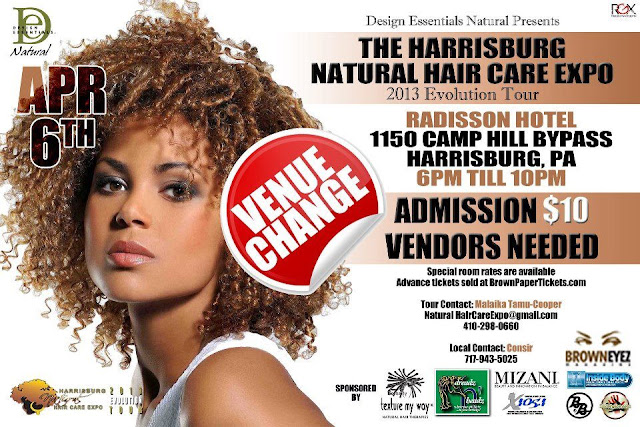
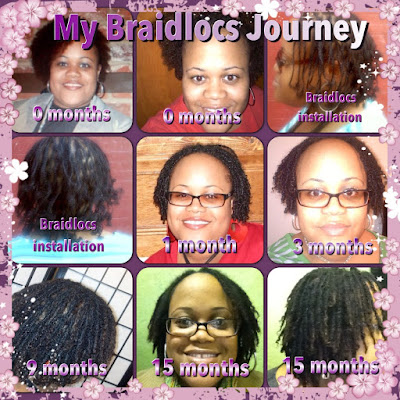
Aziza Beauty Blog was created to further promote the ideals of natural hair and skincare for all Asian, Indian, Middle Eastern, Hispanic,African American, Biracial & Caribbean people.
Once I saw this group perform their Kung Fu techniques, I knew I had to post a seperate blog to promote them. The Shaolin Dragon School of Kung Fu gives an awe-inspiring performance. It is very rare to see a group African American kids and young adults that can master this Chinese Martial Art. Kung Fu, also known as wushu consist of a number of fighting styles that were developed over the centuries.
In addition to traditional Kung-Fu and Tai Chi training, the Shaolin Dragon School of Kung-Fu performs public exhibitions, sponsors tournaments and facilitates a martial arts summer camp. Through Kung-Fu, students of all ages learn the value of discipline, confidence, self esteem, agility, leadership, self defense and physical fitness. Whether you are an adult seeking to improve your health and fitness, or a parent seeking a worthwhile extracurricular activity for your child, you will find your answer at the Shaolin Dragon School of Kung-Fu.
They offer a variety of martial arts instruction including:
Forms Weapons Take downs Self defense Tai Chi Seminars (available upon request)
God-S Wearable Art is a unique and creative line that uplifts the image of women. Each image is painted to represent beauty and the feminine spirit. The collection ranges from T-shirts, Jackets, earrings, and handbags to name a few.
Check out these hand painted leather earrings from God-S Wearable Art:
I always like to update the blog with pictures of events that we participate in. We have been very busy this past month, but here are a few pictures of our past events this month. As always we meet many vendors and we will update you with the individual businesses info in the future.
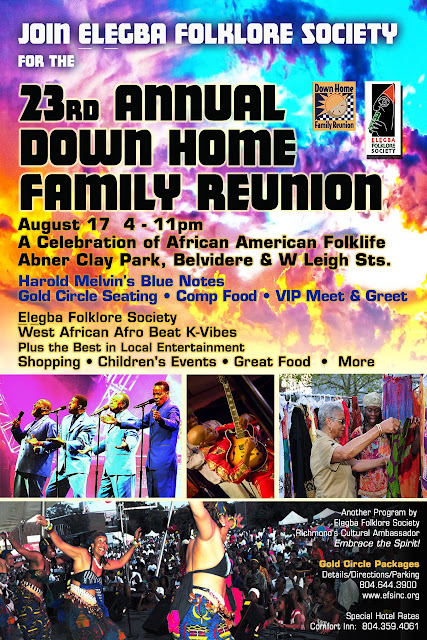
Down Home Family Reunion:
The Down Home Family Reunion was a great outing for the entire family. We had many supporters come out and visit Aziza Beauty Supply at the event. We were so busy, that I did not get many pictures, but here a few:
This was another great community event that was Free! IEC is the home to a variety of different salons in one building. All of the salons had segments that they produced in this show. They also had the The Shaolin Dragon School of Kung-Fu come out and show out at the event. Check out the pics:
A Celebration of African American Folklife August 15, 2009
Richmond, Virginia
WHEN Saturday, August 15, 2009 • 4 - 11 pm, Free.
WHERE Abner Clay Park, Downtown in Historic Jackson Ward Belvidere & West Leigh Streets (convenient, at I-95 Interchange, Exit 76B) Richmond, Virginia.
WHO A Family Festival Open to the Public.
Presented by Elegba Folklore Society, Inc. Richmond's Cultural Ambassador
WHAT A Celebration of African American Folklife. Weekend Event Features an All-Star Line-Up of World Music and Dance, Entertainment and Cultural Traditions.
FEATURES R&B Band and Show, African Dance, Music & the Oral Tradition with Elegba Folklore Society, and more.
Saturday in the Park: Interactive Folkloric Demonstrations, The Heritage Market, Delicious Down Home Food, and more.
Another You Tube video that I love called "Tribes of the Motherland"
After watching the video I was intrigued about how many tribes there actually are in Africa. Here is what I found on "The Africa Guide"
Afar The Afar people live primarily in Ethiopia and the areas of Eritrea, Djibouti, and Somalia in the Horn of Africa. Anlo-Ewe The Anlo-Ewe people are today in the southeastern corner of the Republic of Ghana. They settled here around 1474 after escaping from their past home of Notsie. Amhara The Amhara are the politically and culturally dominant ethnic group of Ethiopia. They are located primarily in the central highland plateau of Ethiopia and comprise the major population element in the provinces of Begemder and Gojjam and in parts of Shoa and Wallo. Ashanti The Ashanti live in central Ghana in western Africa approximately 300km. away from the coast. The Ashanti are a major ethnic group of the Akans in Ghana, a fairly new nation, barely more than 50 years old. Bakongo The Bakongo people (aka. the Kongo) dwell along the Atlantic coast of Africa from Pointe-Noire, Congo (Brazzaville) to Luanda, Angola. Bambara The Bambara are a large Mande racial group located mostly in the country of Mali. They are the largest and most dominant group in that country. Bemba The Bemba are located in the northeastern part of Zambia and are the largest ethnic group in the Northern Province of Zambia. Berber Berbers have lived in Africa since the earliest recorded time. References date back to 3000 BC. There are many scattered tribes of Berber across Morocco, Algeria, Tunisia, Libya, and Egypt. Bobo The Bobo peple have lived in western Burkina Faso and Mali for centuries. They are known for their masks which are worn with elaborate outfits for celebrations. Primarily agricultral people they also cultivate cotton which they use to trade with others. Bushmen/San The 'Bushmen' are the oldest inhabitants of southern Africa, where they have lived for at least 20,000 years. Their home is in the vast expanse of the Kalahari desert. Chewa The Chewa, also known as the Cewa or Chichewa is an African culture that has existed since the beginning of the first millennium, A.D. They are primarily located in Zambia, Zimbabwe, with the bulk of the population in Malawi. Dogon The Dogon are a cliff-dwelling people who live in Southeastern Mali and Burkina Faso. Among the people groups in Africa they are unique in that they have kept and continued to develop their own culture even in the midst of Islamic invasions which have conquered and adapted many of the current people groups Fang The Fang are especially known for their guardian figures which they attached to wooden boxes containing bones of the ancestors. The bones, by tradition, are said to contain the power of the dead person, in fact, the same amount of power that the person had while still alive. Fon The Fon of Benin, originally called Dahomey until 1975, are from West Africa. The Fon are said to have originated in the area of Tado, a town in Tago, at approximately the same latitude as Abomey, Benin. Fulani The Fulani people of West Africa are the largest nomadic group in the world, primarily nomadic herders and traders. Through their nomadic lifestyle, they established numerous trade routes in West Africa. Ibos from Nigerian the Ibos live in villages that have anywhere from a few hundred to a few thousand people comprised of numerous extended families. Kikuyu (Gikuyu) Having migrated to their current location about four centuries ago, the Kikuyu now make up Kenya’s largest ethnic group. Maasai The Maasai, famous as herders and warriors, once dominated the plains of East Africa. Now however they are confined to a fraction of their former range. Mandinka The Mandinka are an ethnic group that live in West Africa, primarily Senegal, Gambia, and Guinea-Bissau, but some also live in Burkina Faso, Mali, and Cote d'Ivoire. Pygmies There are many different 'Pygmy' peoples – for example, the Bambuti, the Batwa, the Bayaka and the Bagyeli ('Ba -' means 'people') – who live scattered over a huge area in central and western Africa, in the Democratic Republic of Congo (DRC), Congo (Brazzaville), Cameroon, Gabon, Central African Republic, Rwanda, Burundi and Uganda. Samburu The Samburu are related to the Masai although they live just above the equator where the foothills of Mount Kenya merge into the northern desert and slightly south of Lake Turkana in the Rift Valley Province of Kenya. Senufo The Senufo are a group of people living in northern Cote d'Ivoire and Mali. They are known as excellent farmers and are made up of a number of different groups who moved south to Mali and Cote d'Ivoire in the 15 and 16th centuries. Tuareg The Tuareg people are predominently nomadic people of the sahara desert, mostly in the Northern reaches of Mali near Timbuktu and Kidal. Wolof The Wolof are one of the largest people groups that inhabit modern-day Senegal. They live anywhere from the desert area of the Sahara to the rain forests. Traditionally many Wolof lived in small villages governed by an extended family unit but now most Wolof move to cities where they are able to get jobs. Yoruba The Yoruba people live in Southwest Nigeria and Benin. They have developed a variety of different artistic forms including pottery, weaving, beadwork, metalwork, and mask making. Zulu The Zulu are the largest ethnic group in South Africa. They are well known for their beautiful brightly colored beads and baskets as well as other small carvings.
I have been hearing some buzz about JUARA skincare. The founders are four women who decided to create a line that included their Asian ancestry with their western upbringing. JUARA products contain Indonesian botanicals that help promote skin health and well being naturally. Check out this video I found of them explaining who they are the JUARA line.
Indulge in decadent botanical skincare treatments that evoke the elegance of ancient Indonesian royalty. Safe, gentle and effective. 100% Vegetarian, no artificial colorants. Made in USA.
More and more people are deciding to go natural these days. I wrestled with going going natural for a while. When I first tried to go natural, I just did not know what to do with my hair. I went to a hair stylist and she convinced me to get a perm!!! She stated that there was nothing she could do with it in its natural state. It is distressing to know that so many "professional" hair stylist do not know what to do with AfricanAmerican hair in its natural state. Many years later, I decided to do it again this time with the help of online resources such as Motown Girl & Nappturality.
Now, there are so many more resources out there than before to help people with their natural journey. It is refreshing to see so many people embracing their own natural beauty. I wonder sometimes where did we go wrong with what we considered as "beautiful" for African American women and their hair. I can speculate that our history may have had something to do with it.
So for those who are considering going natural or are already natural, here are some useful links:
Become a Contributing Writer at Aziza Beauty Blog!
Become a Contributing Writer at Aziza Beauty Blog!Becoming a contributor will allow you to express your thoughts, tips, stories, inspirations. Contributors will receive name recognition and if applicable a link to their business or organization if provided.
All rights are reserved to you. Please note that all submissions must be original and you must own the copyright; however, submitting to Aziza Beauty Blog does not guarantee publication. We only choose submissions that we feel our readers would be most interested in and do not accept any submissions that contains vulgar language or content.
We welcome both published and independent authors to submit quality written articles, tips & advice, reviews, and photography.If you are ready to start contributing then send your press releases, articles to: contact@azizabeautysupply.com. Please allow 2-4 weeks for a response.
The Aziza Beauty Blog is written with several goals in mind:
To inform current and potential clients about our company and any new product developments.
To encourage dialogue with our customer base regarding Aziza Beauty Supply’s product collection and our company as a whole.
To enrich the lives of our readers with insightful articles and tips.
To support both the blogging community and other women-owned businesses on the web.
To network with like-minded businesses and further promote the ideals of natural hair and skincare.
Corrections & Revisions: Every effort is made to present accurate, complete information within this blog. Should a correction or revision become necessary, we’ll note it on our next update. We reserve the right to make corrections to any aspects of the blog, notably grammar and spelling, we reserve the right to correct these minor errors at any time. Authorship: This blog is authored by several contributing authors as well as Aziza Beauty Supply’s founders, Darshall Banks and Michael Maxey Jr, and the opinions expressed herein are solely theirs. They may not accurately represent those of other Aziza Beauty Supply’s staff members, associates, representatives Copyright & Ownership: All content on this website is the exclusive property of Aziza Beauty Supply’s. Said content includes text, graphics, logos, icons, images, audio and video clips, digital downloads, and software. Our content is protected by United States and international copyright laws and we reserve all rights contained therein. In case of dispute or infringement, we will rigorously defend our rights to this material. The material contained herein cannot be altered, reprinted, distributed or disseminated without the express written consent of an authorized representative of Aziza Beauty Supply’s.
Furthermore, www.AzizaBeautySupply.com and other marks indicated on our site are trademarks owned exclusively by Aziza Beauty Supply. The use of these trademarks and trade dress is prohibited if used in connection with the sale of any product that is not Aziza Beauty Supply’s, in any manner that seeks to disparages or discredit Aziza Beauty Supply or in any manner that may cause confusion among our customers.